Lose Your Mind 2 of 4

Lose Your Mind 2 of 4

Objective: With improvement in mind, we will use Acts 16 as a guide for discipleship development, to lose our restrictive view in favor of God’s unrestricted power for progress.

Dealing With God’s No

Acts 16:6-10 New Living Translation… Next Paul and Silas traveled through the area of Phrygia and Galatia, because the Holy Spirit had prevented them from preaching the word in the province of Asia at that time. 7Then coming to the borders of Mysia, they headed north for the province of Bithynia, but again the Spirit of Jesus did not allow them to go there. 8So instead, they went on through Mysia to the seaport of Troas.

9That night Paul had a vision: A man from Macedonia in northern Greece was standing there, pleading with him, “Come over to Macedonia and help us!” 10So we decided to leave for Macedonia at once, having concluded that God was calling us to preach the Good News there.

Introduction: When mortal control meets divine sovereignty, there will either be humble submission or hard headed rebellion.

Overwhelming Observations:

-No doesn’t require any explanation (verses 6-8)

-No doesn’t mean cancelled, its a call (verse 9)

-No turns darkness into direction (verse 9)

-No turns potential into proclamation (verse 10)

Punchline: God’s no reveals our spiritual maturity, with the aim of toddler-like tantrums not hindering the progress of the grown-up work of the gospel.

Conclusion: No is hard to hear, but it’s helpful for who we are to become and for who will be made better because we lost our mind.

Isaiah 26:3 “You keep him in perfect peace whose mind (center/heart of you) is stayed on you, because he trusts in you.”

Lose Your Mind 1 of 4

Lose Your Mind 1 of 4

Objective: With improvement in mind, we will use Acts 16 as a guide for discipleship development, to lose our restrictive view in favor of God’s unrestricted power for progress.

You Were Born For This

Acts 16:1-5 New Living Translation… Paul went first to Derbe and then to Lystra, where there was a young disciple named Timothy. His mother was a Jewish believer, but his father was a Greek. Timothy was well thought of by the believers in Lystra and Iconium, so Paul wanted him to join them on their journey. In deference to the Jews of the area, he arranged for Timothy to be circumcised before they left, for everyone knew that his father was a Greek. Then they went from town to town, instructing the believers to follow the decisions made by the apostles and elders in Jerusalem. So the churches were strengthened in their faith and grew larger every day.

Introduction: Christians fully understand the precious beauty of birth, but we also understand the blessed burden of being bound to the purposes of God.

Transition: Luke, the author of our text, quickly shares a biographical sketch of who Paul meets. Verse 1 “…there was a young disciple named Timothy“.

Exposition:

-Christian legacy is strong.

Reference I Timothy 1:5

-Christian character is key.

-Christian progress is on the other side of pain.

Reference Acts 15:1-21

Conclusion: Timothy was mixed up, but thank God he wasn’t messed up!

Nehemiah 4:6 “So built we the wall; and all the wall was joined together unto the half thereof: for the people had a mind to work”.

Taking Jesus At His Word 3 of 3

Taking Jesus At His Word

Objective: To encourage disciples to be fully present in their relationship with God.

Embrace Me

John 14:6 New Living Translation… Jesus told him, “I am the way, the truth, and the life. No one can come to the Father except through me”.

Introduction: There are three Greek words to for life… bios (physical), psuche (soul), and zoe (eternal).

Transition: Zoe is the divine life of God, imputed to humanity at salvation.

Exposition: Embrace the creation, resurrection, and eternal life of Jesus Christ that is imputed and accessible to us.

Life-giving: Creation…

Reference John 1:3-4 All things were made by him; and without him was not any thing made that was made.In him was life; and the life was the light of men.

‌-Life-saving: Resurrection… 

Reference John 11:25 Jesus said unto her, I am the resurrection, and the life: he that believeth in me, though he were dead, yet shall he live…

Life-anchoring: Eternal… 

Reference I John 5:11-12 And this is the record, that God hath given to us eternal life, and this life is in his Son. 12 He that hath the Son hath life; and he that hath not the Son of God hath not life.

Conclusion: Subtraction is not the business of our savior, but addition is! 

Taking Jesus At His Word 2 of 3

Taking Jesus At His Word

Objective: To encourage disciples to be fully present in their relationship with God.

Trust Me

John 14:6 New Living Translation… Jesus told him, “I am the way, the truth, and the life. No one can come to the Father except through me”.

Introduction: The naked truth is uncomfortable, which makes it often ignored.

Transition: Aletheia (Greek): truth that is reality; unhidden/revelation. Verity/fundamental principle; irrefutable.

Exposition: What Jesus has revealed in this statement is that…

-Truth will tie you up (verses 8-11) and free you up (verses 12-14)

Reference John 8:32 “And you will know the truth, and the truth will set you free.”

‌-Truth will either drive you or draw you

Conclusion: Trusting Jesus should be easy because Jesus is the truth. However, Trusting Jesus is often difficult, because the truth challenges us to change.

Taking Jesus At His Word 1 of 3

Taking Jesus At His Word 1 of 3

Objective: To encourage disciples to be fully present in their relationship with God.

Follow Me

John 14:6 New Living Translation… Jesus told him, “I am the way, the truth, and the life. No one can come to the Father except through me”.

Introduction: Sometimes you can be looking for something that is within your grasp, but you just can’t see it.

Transition: This I AM statement of Jesus asserts his sovereignty (I am), supremacy (the), and his salvific ability (way).

Exposition: What Jesus has revealed in this statement is that the way isn’t a path, it’s a person!

Conclusion: The person of Jesus Christ is the way, and we already know him. Allow yourself to be aware of his presence and power, and stop overlooking him.

The God of Another Chance

The God of Another Chance

Luke 13:6-9 NLT… Then Jesus told this story: “A man planted a fig tree in his garden and came again and again to see if there was any fruit on it, but he was always disappointed. 7 Finally, he said to his gardener, ‘I’ve waited three years, and there hasn’t been a single fig! Cut it down. It’s just taking up space in the garden.’ 8 “The gardener answered, ‘Sir, give it one more chance. Leave it another year, and I’ll give it special attention and plenty of fertilizer. 9 If we get figs next year, fine. If not, then you can cut it down.’”

Introduction: In the wake of two national tragedies, Jesus preaches that condemnation is not the posture to assume but repentance is. When we fail to repent, we choose to perish. Reference verses 1-5

Transition: This parable of the barren fig tree is an appendix of the verses that precede it. It’s Jesus’ way of illustrating that when your focus is judgmental, critical, and damning of others, you have lost sight of your responsibility to be faithful and fruitful.

Exposition:

-The landowner’s expectation is fair but futile… verse 6

-The landowner’s evaluation is not rash but reasonable… verse 7

-The extension is granted because of the gardener’s plea for mercy and plan for grace… verse 8

Conclusion: This story is left incomplete, because it wasn’t about the tree in the first place. There is a possibility for conversion or condemnation… verse 9

I Will Trust In The Lord

I Will Trust In The Lord

Nahum 1:7 New Revised Standard Version… “The Lord is good, a refuge in times of trouble. He cares for those who trust in him…” 

Introduction: The act of trusting in someone/something can either be negative (costing happiness) or positive (causing happiness).

Transition: Nahum is a minor prophet with a major message, that is addressed to Israel but Nineveh is the subject.

Exposition: Our text offers three reasons that should convince us to trust in the Lord…

Because of God’s Stellar Reputation (The Lord is good)

Because God is a Strong Refuge (a refuge in times of trouble)

Because of our Storied Relationship (He cares for those who trust in him)

Conclusion: Life’s problems won’t scare you, when you know the answer!

The Scandal of Christmas

The Scandal of Christmas

Genesis 3:1-10 The Message… The serpent was clever, more clever than any wild animal God had made. He spoke to the Woman: “Do I understand that God told you not to eat from any tree in the garden?”   2-3 The Woman said to the serpent, “Not at all. We can eat from the trees in the garden. It’s only about the tree in the middle of the garden that God said, ‘Don’t eat from it; don’t even touch it or you’ll die.’”   4-5 The serpent told the Woman, “You won’t die. God knows that the moment you eat from that tree, you’ll see what’s really going on. You’ll be just like God, knowing everything, ranging all the way from good to evil.”   6 When the Woman saw that the tree looked like good eating and realized what she would get out of it—she’d know everything!—she took and ate the fruit and then gave some to her husband, and he ate.Immediately the two of them did “see what’s really going on”—saw themselves naked! They sewed fig leaves together as makeshift clothes for themselves.When they heard the sound of God strolling in the garden in the evening breeze, the Man and his Wife hid in the trees of the garden, hid from God.   9 God called to the Man: “Where are you?”   10 He said, “I heard you in the garden and I was afraid because I was naked. And I hid.”

Introduction: Scandal is defined as an action or event regarded as morally or legally wrong and causing general public outrage.

Transition: The Christmas story is familiar to us, but the scandalous truth is something we choose ignore and deem as inappropriate for our picturesque customs.

Exposition: The scandal of Christmas is sin, which is rooted in self and that is a dilemma that demands a savior.

Conclusion: Yes, our story is scandalous but our God is the solvent for sins scarlet stain!

The Changeless Christ

The Changeless Christ

Hebrews 13:8 NLT… Jesus Christ is the same yesterday, today, and forever.

Introduction: Consistency is an adjective meaning unchanging in nature, standard, or effect over time.

Transition: As the author of this epistle to the Hebrews culminates this doctrinal exhortation, thoughts of consistency dominate the discourse.

Exposition: That’s both exciting and empowering news as we brace ourselves for the close of this year. 

Testimony

Opportunity

Expectancy

Conclusion: Let’s not be naive by thinking that consistency means predictability. 

I Like Church, But… 3 of 3

I Like Church, But… 3 of 3

I hope It Anticipates A Great Future

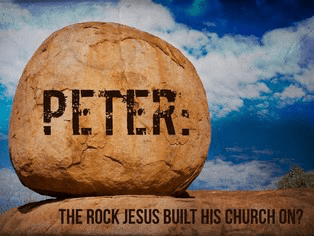
Matthew 16:18 NLT… Now I say to you that you are Peter (which means ‘rock,’) and upon this rock I will build my church, and all the powers of hell will not conquer it.

Introduction: The church of Jesus Christ is both an organism and an organization, that must accentuate the positive and eliminate the negative.

Transition: As Jesus inches close to death, he decides to retreat with his disciples to make sure that they understood the mission, and to secure their role in the movement.

Exposition: I like church, but I hope it anticipates a great future but it actually has one but doesn’t act like it!

Strong Word (I say)

Superior Construction (my church)

Sure Promise (will not)

Conclusion: This goal of trilogy has been to educate, empower, and encourage you to allow God’s spirit to be at work in your life to build what only God can.