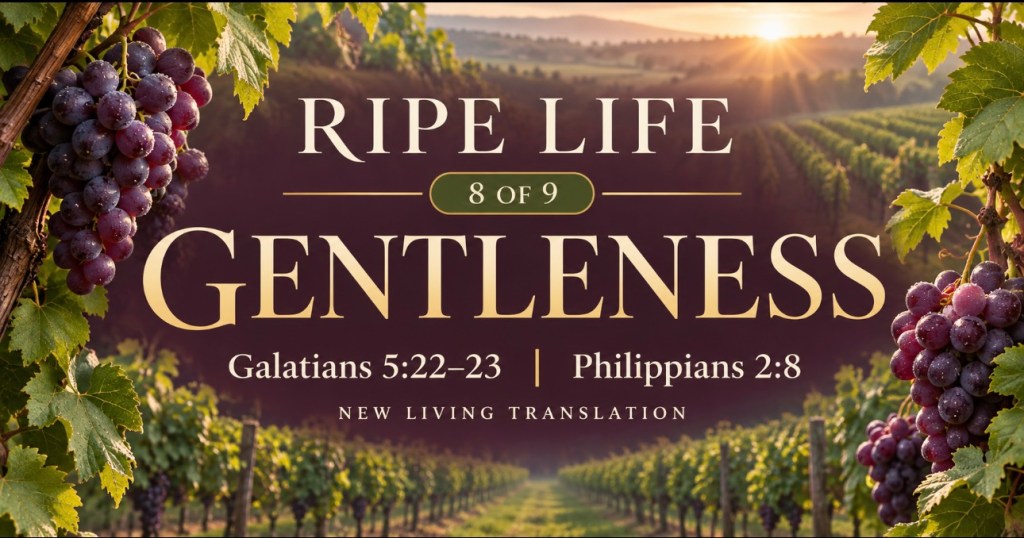
Ripe Life 8 of 9

Galatians 5:22-23 New Living Translation… But the Holy Spirit produces this kind of fruit in our lives: love, joy, peace, patience, kindness, goodness, faithfulness, 23 gentleness, and self-control. There is no law against these things!

Philippians 2:8 New Living Translation… “He humbled himself in obedience to God and died a criminal’s death on a cross.”

Sermon in a Snippet: A ripe life has enough strength to serve and enough humility to handle people with care.

Introduction: What Comes Out Under Pressure?

Our spiritual maturity becomes evident when life puts the squeeze on us. Gentleness brings our strength under God’s direction and places it at the service of others. Those who bear Christ’s name should bear his likeness.

Does the Spirit govern my response, or must others survive my reaction?

1. Gentleness Bows: Release the Need to Be First

“He humbled himself.”

Jesus knew who he was, so he could serve without demanding that everyone acknowledge his importance. Our relationships must reflect our Redeemer. Gentleness releases selfish ambition and declares, “God’s work matters more than my position.”

  • Celebrate a blessing that does not spotlight you.
  • Remember that gifts alone cannot measure maturity.
  • Receive correction without immediately preparing a defense.

Can people tell me the truth without being afraid of my reaction?

“Pride must always prove itself, while humility is free to grow.”

2. Gentleness Yields: Let God Govern Your Response

“In obedience to God.”

Christ’s humility had direction: he submitted to the Father, remaining faithful when obedience became costly. Gentleness involves more than a pleasant personality. It allows the Spirit to govern our tone, protect another person’s dignity, and guide correction toward recovery.

  • Acknowledge the problem without setting the room on fire.
  • Address the behavior. Refuse the insult.
  • Choose words that serve the truth.

Reference: Proverbs 15:1; Galatians 6:1

Do I help regulate the atmosphere, or do I add more heat?

Pray this devotionally: “Lord, take charge of my tone.”

3. Gentleness Gives: Accept the Cost of Loving Well

“Died a criminal’s death on a cross.”

Jesus gave himself for our sins, and those redeemed by his sacrifice are called to reflect his self-giving love. Gentleness may cost us the last word, the pleasure of making someone look small, or the satisfaction of saying, “I told you so.” Love makes room for another person’s progress.

  • Slow down because people matter.
  • Remember God’s patience with your unfinished places.
  • Serve others with courage and care, including appropriate boundaries.

Who needs patience from me while they are still growing?

“We can entrust our standing to God while loving people faithfully.”

Conclusion: Strength Shaped by Jesus

The risen Savior gives us his Spirit, and the Spirit produces fruit. Our sharp edges can change. Our words can heal. Our strength can become a shelter.

Let pride bow! Let obedience lead! Let love give!

Let the Savior who dealt gently with you teach you to deal gently with others. That is gentleness. That is a ripe life!

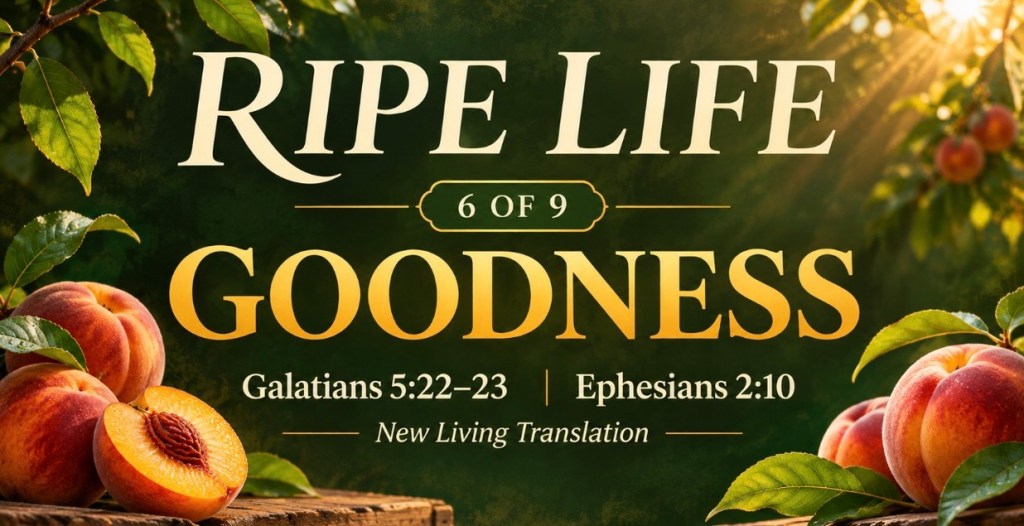
Ripe Life 6 of 9

Galatians 5:22-23 New Living Translation… But the Holy Spirit produces this kind of fruit in our lives: love, joy, peace, patience, kindness, goodness, faithfulness, 23 gentleness, and self-control. There is no law against these things!

Ephesians 2:10 New Living Translation… For we are God’s masterpiece. He has created us anew in Christ Jesus, so we can do the good things he planned for us long ago.

Main Thought: What God is doing within us should become visible through the good we do for others.

Remember: We’re not saved by good works, but we are saved for good works.

Reference Galatians 6:10

1. “For we are God’s masterpiece.”

God’s workmanship gives us dignity and responsibility.

  • Our salvation is God’s gracious work.
  • Our worth rests in God, beyond the opinions of others.
  • We reflect his character by loving deeply, giving sacrificially, and forgiving freely.
  • God brings us together as one family to love and serve.

Personal reflection: Does the way I treat others show that God values them?

2. “He has created us anew in Christ Jesus.”

New life in Christ produces a changed life.

  • Regeneration: God gives spiritually dead people new life.
  • Sanctification: God progressively frees us from sin’s controlling power.
  • The Holy Spirit changes our desires and empowers our obedience.
  • Scripture, prayer, worship, and fellowship nourish us; practicing obedience helps us mature.

Remember: We’re being made new in Christ so that we may be made ripe for Christ!

Personal reflection: Where do I need to put God’s Word into practice?

3. “So we can do the good things he planned for us long ago.”

God prepares opportunities for us to practice goodness.

  • Tell the truth, work honestly, share generously, and speak helpfully.
  • Recognize interruptions as possible opportunities to serve.
  • Stand for justice and do what is right, even when it costs.
  • Let goodness begin in your home and extend into your community.

Personal reflection: Whose burden can I help make lighter this week?

Closing Reminder: Love deeply. Give sacrificially. Forgive freely. Stand for what is right. Let the life be ripe!

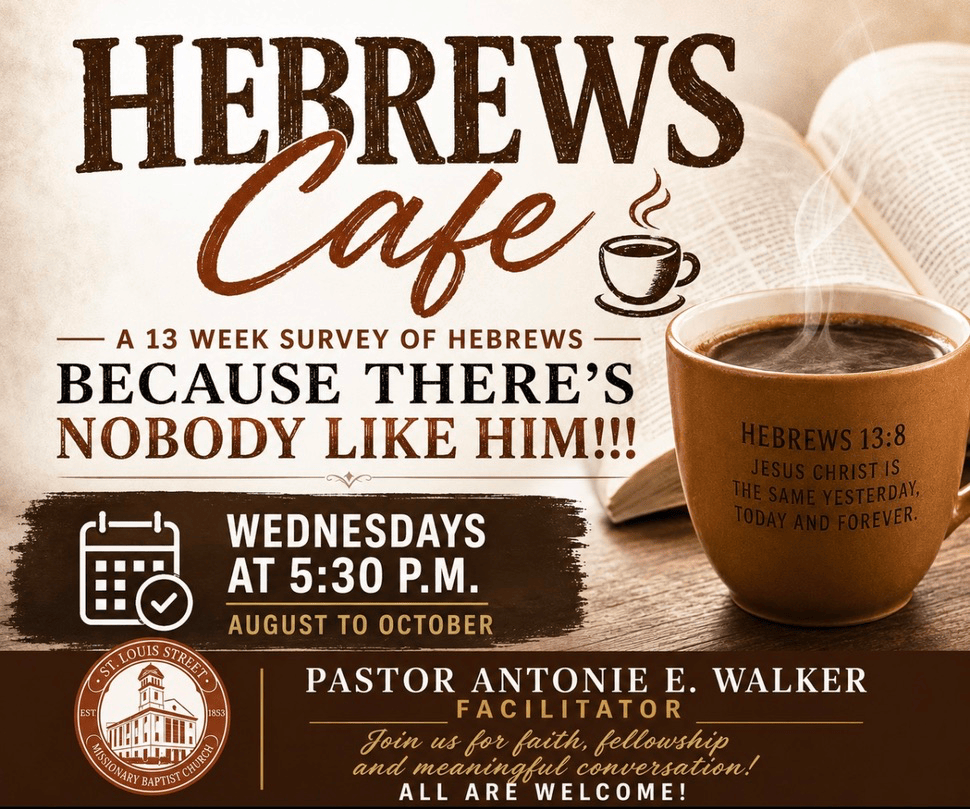
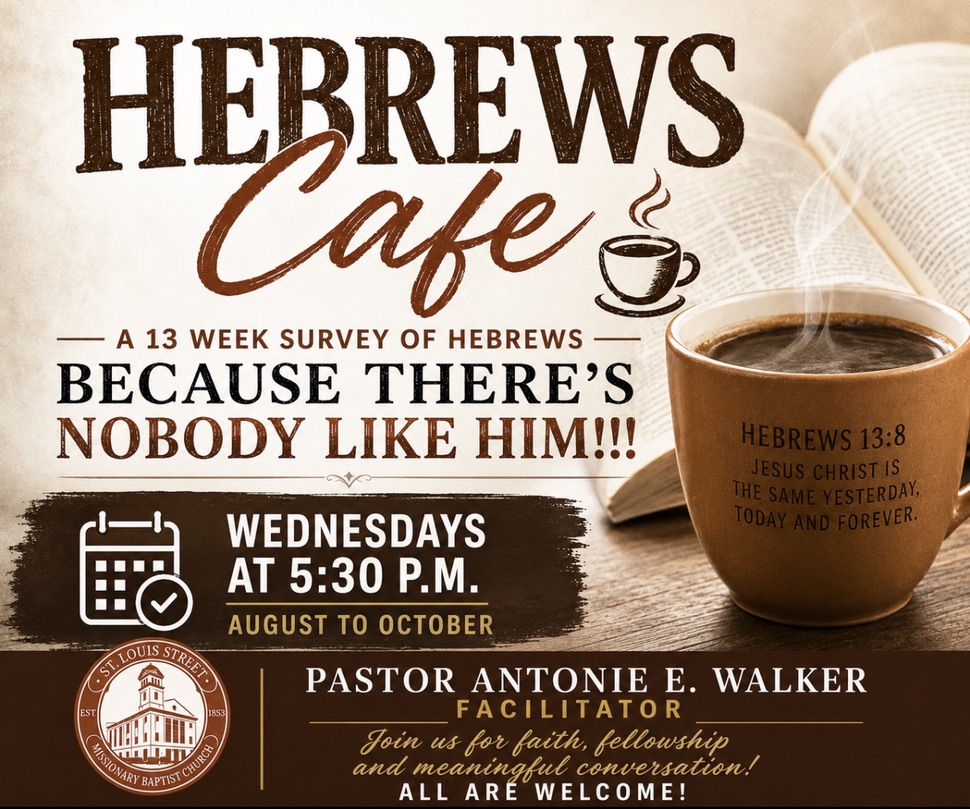
Hebrews 13 Bible Study

Faith Lived Out in Everyday Life

Central Truth: A life centered on Jesus expresses itself through love, holiness, generosity, and faithful obedience.

Movement 1: Let Love Reach Beyond Your Circle

Hebrews 13:1–3

  • Continue loving one another as brothers and sisters.
  • Practice hospitality toward strangers; some have welcomed angels without realizing it.
  • Remember prisoners and those suffering mistreatment with compassion that identifies with their circumstances.

Practical Interjection: Love becomes visible when we make room for people who cannot repay us. Welcome someone unfamiliar, support a struggling family, or remember a person others have forgotten.

Lesson in a Line: Brotherly love opens the door and enters another person’s struggle.

Discuss: Who needs more than your sympathy—your presence or practical help?

Movement 2: Honor God in Your Relationships and Resources

Hebrews 13:4–6

  • Honor marriage and remain sexually faithful.
  • Recognize that God takes sexual immorality and adultery seriously.
  • Resist the love of money and practice contentment.
  • Ground your security in God’s promise to remain with His people.

Practical Interjection: Protect your marriage through honest conversations and healthy boundaries. Examine your spending, too: contentment grows as we learn to trust God beyond what we possess.

Lesson in a Line: Faithfulness guards our relationships, and contentment rests in God’s presence.

Discuss: Where are you seeking security in possessions rather than trusting God?

Movement 3: Follow Faithful Examples and Stay Grounded in Christ

Hebrews 13:7–9

  • Remember the leaders who taught you God’s word.
  • Consider the outcome of their lives and imitate their faith.
  • Rest in the unchanging character of Jesus Christ.
  • Resist unfamiliar teachings that pull you away from the truth.
  • Receive spiritual strength through God’s grace rather than religious food regulations.

Practical Interjection: A teaching can sound impressive and still lead you away from Christ. Examine what you hear by Scripture, and look for leaders whose lives demonstrate the faith they teach.

Lesson in a Line: Follow faithful examples while keeping your foundation in the unchanging Christ.

Discuss: What helps you distinguish biblical teaching from an appealing religious message?

Movement 4: Identify with Jesus, Even When It Costs

Hebrews 13:10–14

  • Jesus suffered outside Jerusalem to make His people holy through His blood.
  • Believers are called to identify with Him and bear the disgrace associated with following Him.
  • Our lasting home is the city God has prepared, rather than any earthly place of security.

Practical Interjection: Following Jesus may cost approval, convenience, or opportunity. Decide whose approval matters before pressure arrives.

Lesson in a Line: We can bear rejection with Jesus because our future belongs to God.

Discuss: Where might obedience to Christ require you to risk someone’s approval?

Movement 5: Offer Worship through Your Lips and Your Life

Hebrews 13:15–16

  • Through Jesus, continually offer praise to God.
  • Openly acknowledge His name.
  • Do good and share with those in need.
  • Recognize that these sacrifices please God.

Practical Interjection: Let Sunday’s praise become Monday’s generosity. Thank God aloud, meet a practical need, and share something that costs you time, attention, or resources.

Lesson in a Line: Worship includes the praise we offer and the good we do.

Discuss: What act of generosity could accompany your praise this week?

Movement 6: Support Spiritual Leadership and Pray Faithfully

Hebrews 13:17–19

  • Respond cooperatively to spiritual leaders who watch over your souls.
  • Remember that leaders must give an account to God.
  • Help make their service a joy through faithful participation.
  • Pray for leaders to maintain clear consciences and live honorably.

Practical Interjection: Pray for your leaders as specifically as you evaluate them. Offer encouragement, participate faithfully, and raise concerns honestly. Spiritual leadership remains accountable to God’s word.

Lesson in a Line: A healthy church grows through accountable leadership, willing cooperation, and faithful prayer.

Discuss: How can you help strengthen the spiritual health of your church?

Movement 7: Depend on God to Equip You

Hebrews 13:20–21

  • God is the source of peace.
  • He raised Jesus, the great Shepherd, from the dead.
  • The eternal covenant is secured through Christ’s blood.
  • God equips His people to do His will and works within them through Jesus Christ.
  • All glory belongs to Christ.

Practical Interjection: When obedience feels beyond your ability, turn the passage into prayer: “Lord, equip me to do Your will and work in me what pleases You.”

Lesson in a Line: The God who calls us to obedience supplies what we need to obey.

Discuss: Where do you need God’s strength to take your next faithful step?

Movement 8: Receive Encouragement and Remain Connected

Hebrews 13:22–25

  • Receive the letter’s exhortation with a willing spirit.
  • Notice the concern for Timothy and the hope of renewed fellowship.
  • Extend greetings throughout the community of believers.
  • Depend on God’s grace.

Practical Interjection: Stay teachable and connected. Receive a needed word, check on an absent member, and make fellowship a priority.

Lesson in a Line: Faith matures in a community that receives truth and extends grace.

Discuss: What would it look like for you to become more teachable or more connected?

Closing Application: This week, welcome someone, protect a relationship, practice contentment, meet a need, and pray for your church’s leaders.

Hebrews 12 Bible Study

Keep Running, Keep Growing, Keep Worshiping

Central Truth: Faith perseveres by focusing on Jesus, receiving God’s correction, and responding to His grace.

Movement 1: Run with Your Eyes on Jesus

Hebrews 12:1–3

  • The witnesses of Hebrews 11 testify that a life of faith is possible.
  • Lay aside both the weights that hinder progress and the sin that entangles.
  • Run your assigned race with endurance.
  • Consider Jesus, who endured the cross and now occupies the place of honor beside God.

Practical Interjection: Everything that slows you down may not be sinful, but it still deserves examination. An overcrowded schedule, unhealthy attachment, or constant distraction can hinder spiritual growth.

Lesson in a Line: You run faithfully when you release what hinders and focus on Jesus.

Discuss: What weight do you need to lay aside?

Movement 2: Receive the Father’s Training

Hebrews 12:4–11

  • The struggle against sin requires perseverance.
  • God’s discipline expresses His love and confirms His fatherly care.
  • His correction aims at our good so that we may share in His holiness.
  • Training is painful in the moment but produces righteous living in those who receive it.

Practical Interjection: Ask more than, “When will this be over?” Ask, “Father, how should I respond, and what do I need to learn?” This passage does not authorize us to label every hardship as punishment for a particular sin.

Lesson in a Line: God’s loving discipline develops the holiness comfort alone cannot produce.

Discuss: How do you usually respond to correction—with resistance, discouragement, or willingness to grow?

Movement 3: Strengthen Your Steps and Support Others

Hebrews 12:12–13

  • Renew your courage when weariness sets in.
  • Pursue a straight course of obedience.
  • Help create conditions in which the weak can recover rather than stumble.

Practical Interjection: Someone’s spiritual recovery may need your encouragement, a shared meal, a prayer, or a faithful example. Make your next step one that helps someone else take theirs.

Lesson in a Line: Perseverance includes strengthening others while you continue walking faithfully.

Discuss: Who needs encouragement from you this week?

Movement 4: Pursue Peace and Protect Your Spiritual Priorities

Hebrews 12:14–17

  • Work toward peace with everyone and pursue holiness.
  • Watch over one another so that no one fails to receive God’s grace.
  • Address bitterness before it spreads and harms the community.
  • Learn from Esau, who exchanged his birthright for immediate satisfaction and later could not reverse the loss of the blessing.

Practical Interjection: A temporary appetite can produce a lasting consequence. Before making a decision, ask, “What am I giving up to satisfy what I want right now?”

Lesson in a Line: Guard your future by pursuing holiness and refusing to trade lasting blessings for immediate gratification.

Discuss: Where are you tempted to choose immediate relief over faithful obedience?

Movement 5: Recognize the Privilege of Coming to God through Jesus

Hebrews 12:18–24

  • Mount Sinai recalls the fear accompanying the giving of the law.
  • Believers have come to Mount Zion, the heavenly Jerusalem, and the gathered people of God.
  • Jesus mediates the new covenant.
  • His sprinkled blood speaks of forgiveness rather than crying out for vengeance as Abel’s blood did.

Practical Interjection: When you pray, remember the access Jesus has secured for you. Approach God with confidence, gratitude, and reverence.

Lesson in a Line: Jesus brings His people into a relationship with God secured by His blood.

Discuss: How should access to God through Jesus change your prayer life?

Movement 6: Listen Carefully and Worship Reverently

Hebrews 12:25–29

  • Take God’s voice seriously; do not refuse the One who speaks.
  • God will shake creation, removing what cannot endure.
  • His people receive a kingdom that cannot be shaken.
  • Respond with thanksgiving and worship marked by reverence and awe.
  • God’s holiness remains unchanged: He is a consuming fire.

Practical Interjection: Careers, finances, influence, and routines can all be shaken. Build your deepest confidence on God’s kingdom, and let gratitude shape how you live and worship.

Lesson in a Line: An unshakable kingdom calls for grateful obedience and reverent worship.

Discuss: What does your response to uncertainty reveal about where you have placed your confidence?

Closing Application: This week, lay aside one hindrance, receive one needed correction, encourage one weary person, and act on one truth God has shown you.

Ripe Life 4 of 9

Galatians 5:22-23 King James Version… But the fruit of the Spirit is love, joy, peace, longsuffering, gentleness, goodness, faith, 23 Meekness, temperance: against such there is no law.

1 Corinthians 13:4a King James Version… Charity suffereth long.

Introduction: The God who has been patient with us can grow patience in us. Is the Spirit producing in me the patience I keep asking others to demonstrate?

1. Patience Is Love with Staying Power

  • Long-suffering: Endurance without bitterness.
  • Frustration does not have to govern our conduct.
  • Patience grows through prayer, Scripture, obedience, and dependence on Christ.

Remember: Patience is the space grace creates between what happens to you and how you respond.

2. God’s Patience Reveals God’s Heart

Reference Psalm 103:8; Romans 2:4

  • God is merciful, gracious, and slow to anger.
  • His patience gives us room to repent.
  • He patiently shapes us into the likeness of His Son.

Remember: Before becoming impatient with others, remember God’s patience with you.

3. Calvary Shows What Patient Love Costs

Reference John 3:16; Romans 5:7–8; Hebrews 12:2–3

  • Jesus willingly endured the cross for our salvation.
  • His endurance teaches us to remain faithful when obedience hurts.
  • Patience can include boundaries, protection, truth, and accountability.

Remember: When patience becomes costly, look to Jesus.

4. The Spirit Grows Patience in Ordinary Places

  • Pause before responding.
  • Remember the mercy God has shown you.
  • Speak truth graciously.
  • Allow room for others to grow.

Remember: Everyday interruptions become opportunities for spiritual growth.

Conclusion: God’s patience was working through the generations, in Christ’s ministry, at the cross, and toward resurrection victory.

Keep yielding to the Spirit. Keep trusting the Savior. Keep obeying while you wait.

This Week’s Application: Where will I practice patience, and what will a patient response look like?

My Prayer: “Lord, teach me to endure without bitterness, correct without cruelty, and wait without abandoning faith.”

Hebrews 11 Bible Study

Central truth: Faith takes God at His word and obeys Him, even when the outcome remains unseen.

Lesson in a line: Faith rests on God’s word before it sees God’s work.

1) The Foundation of Faith… Hebrews 11:1–3

  • Faith gives confidence in what we hope for and assurance about what we cannot see.
  • The faithful receive God’s approval.
  • Creation reminds us that God’s word brings visible realities from what is unseen.

Question to ponder: What is the difference between trusting God and simply hoping things work out?

2) Faith Draws Near and Responds… Hebrews 11:4–7 — Abel, Enoch, and Noah

  • Abel: Faith expresses itself in worship that pleases God.
  • Enoch: Faith seeks God and lives in fellowship with Him.
  • Noah: Faith obeys God’s warning before there is visible evidence.

Faith worships sincerely, seeks God earnestly, and obeys Him promptly.

Question to ponder: Which needs greater attention in your life: worship, fellowship, or obedience?

3) Faith Goes and Waits… Hebrews 11:8–16 — Abraham and Sarah

  • Abraham obeyed God’s call without knowing his destination.
  • Abraham and Sarah depended on God’s faithfulness when His promise seemed humanly impossible.
  • They lived as strangers, looking beyond their present circumstances toward a heavenly homeland.

Faith follows God into the unknown and waits because He is faithful.

Question to ponder: Where is God asking you to obey without having every detail explained?

4) Faith Surrenders and Looks Ahead… Hebrews 11:17–22 — Abraham, Isaac, Jacob, and Joseph

  • Abraham trusted God with Isaac, believing God could even raise the dead.
  • Isaac and Jacob blessed the next generation in light of God’s promises.
  • Joseph anticipated Israel’s departure from Egypt and gave instructions about his remains.

Faith entrusts what it treasures—and the future it cannot control—to God.

Question to ponder: How can your decisions today demonstrate confidence in God beyond your lifetime?

5) Faith Chooses God over Temporary Gain… Hebrews 11:23–28 — Moses and His Parents

  • Moses’ parents acted courageously despite the king’s command.
  • Moses chose identification with God’s people over Egypt’s status and pleasures.
  • He looked toward God’s reward and persevered with his attention fixed on the invisible God.
  • He observed the Passover in obedience to God.

Faith values belonging to God above comfort, position, and temporary pleasure.

Question to ponder: What might faithfulness to God cost you, and why is He worth that cost?

6) Faith Trusts God for the Impossible… Hebrews 11:29–35a — Israel, Rahab, and Other Witnesses

  • Israel crossed the Red Sea.
  • Jericho’s walls fell after Israel followed God’s instructions.
  • Rahab acted on her faith by welcoming the spies.
  • God worked through imperfect people, giving strength in weakness and deliverance from overwhelming opposition.

Faith depends on God’s power when human strength is insufficient.

Question to ponder: Do these examples encourage you without making every victory a guarantee?

7) Faith Endures When Deliverance Does Not Come… Hebrews 11:35b–38

  • Some faithful people suffered torture, imprisonment, deprivation, and death.
  • Their suffering did not mean their faith had failed.
  • Their hope reached beyond present survival to resurrection and lasting life with God.

Faith remains faithful whether God grants escape or strength to endure.

Question to ponder: Does this passage challenge the belief that strong faith always produces comfortable circumstances?

8) Faith Belongs to God’s Greater Story… Hebrews 11:39–40

  • All these witnesses received God’s approval through faith.
  • They did not receive the fullness of everything God had promised during their lifetimes.
  • God’s better plan joins His people across generations in the fulfillment accomplished through Christ.

Faith trusts God to complete a promise larger than one lifetime.

Question to ponder: Does belonging to God’s larger story change the way you understand waiting?

Conclusion: Identify one step of obedience to take, one outcome to surrender, and one promise of God to hold onto this week.

Hebrews 10 Bible Study

Don’t Turn Back Now

Five Comprehensive Movements…

Christ Completed the Sacrifice — vv. 1–18

Come Confidently Into God’s Presence — vv. 19–25

Don’t Reject What Christ Has Done — vv. 26–31

Remember What You’ve Already Survived — vv. 32–34

Keep Moving Forward by Faith — vv. 35–39

Lesson in a Line: Because Jesus finished the work of salvation, we must faithfully finish the walk of faith.

Theme: Because Jesus has finished the work, we must faithfully live life by following The Way.

I. Christ’s Sacrifice Is Superior… Hebrews 10:1–18

A. The Law could point to cleansing, but could not perfect the worshiper — vv. 1–4

The repeated sacrifices under the old covenant reminded the people of sin, but they could not permanently remove sin.

B. Jesus came to accomplish God’s will — vv. 5–10

Christ offered Himself willingly and completely. His sacrifice replaced the continual sacrificial system and provided lasting sanctification.

C. Jesus finished what the priests could never finish — vv. 11–14

The priests repeatedly stood to offer sacrifices. Jesus offered one sacrifice for sins forever and then sat down, demonstrating that His redemptive work was complete.

D. The new covenant provides real forgiveness — vv. 15–18

God writes His laws upon the hearts of His people and promises not to hold their sins against them. Where sins have been forgiven, another sacrifice is unnecessary.

II. Christ Gives Us Access to God… Hebrews 10:19–25

Because Jesus has opened the way into God’s presence, believers are called to respond.

A. Draw near to God — vv. 19–22

Approach God confidently because of the blood of Jesus, with sincere hearts and genuine faith.

B. Hold tightly to hope — v. 23

Do not surrender your confession because the God who made the promise is faithful.

C. Encourage one another — vv. 24–25

Christian faith was never intended to be lived in isolation. Believers should motivate one another toward love, good works, worship, fellowship, and perseverance.

III. Don’t Turn Back After Knowing the Truth… Hebrews 10:26–31

A. Deliberate rejection has serious consequences — vv. 26–27

The writer warns against knowingly rejecting Christ after receiving the truth.

B. Rejecting Christ is more serious than violating Moses’ law — vv. 28–29

To reject the Son of God and disregard His sacrifice is to reject the only means of salvation.

C. God takes holiness seriously — vv. 30–31

God is both gracious and just. The passage reminds believers that accountability before God should never be treated casually.

IV. Remember How Far You’ve Already Come… Hebrews 10:32–34

The believers are told to remember their earlier days of faith.

They had endured suffering, public ridicule, persecution, and loss, yet they remained faithful because they knew they possessed something eternal that could not be taken from them.

Key idea: Sometimes remembering what God has already brought you through gives you strength for what you are facing now.

V. Don’t Throw Away Your Confidence… Hebrews 10:35–39

A. Confidence carries great reward — v. 35

Do not abandon the confidence you once had in God.

B. Patient endurance is necessary — v. 36

Faithfulness requires endurance between receiving the promise and seeing the promise fulfilled.

C. Christ is coming — vv. 37–38

The believer must continue living by faith rather than retreating because circumstances become difficult.

D. We are people who move forward in faith — v. 39

The chapter closes with a declaration of identity: believers are not those who shrink back but those who continue believing.

Hebrews 9 Bible Study

THE BETTER WAY

Introduction: Hebrews 9 reminds us that everything God established under the old covenant was pointing toward something greater. The tabernacle, the priests, the sacrifices, the blood, the furnishings, and even the restricted access into the Most Holy Place were all teaching lessons about the holiness of God and humanity’s need for reconciliation. The writer of Hebrews is not criticizing what God established. He is showing us that it was never intended to be the final destination. It was a shadow pointing toward Jesus Christ. Hebrews 9 declares that what the old system could only symbolize, Jesus has completely accomplished. Through Christ, we have a better sacrifice, a better cleansing, a better covenant, and better access to God.

Lesson in a Line: Religion is limiting, but relationship is limitless/liberating.

–Religion Can Bring You Near Without Bringing You In… Hebrews 9:1–10

The chapter opens by describing the earthly sanctuary. There was a lampstand, a table, sacred bread, an altar of incense, the Ark of the Covenant, and the Most Holy Place. Everything had a purpose. Everything had meaning. Everything was carefully arranged. Yet there was still a curtain. That curtain preached a sermon every day without saying a word: You can come this far, but you cannot come any farther.

The priests regularly entered the first room to perform their religious duties, but only the high priest could enter the Most Holy Place, and even he could enter only once a year. He could not enter casually. He could not enter carelessly. He could not enter without blood.

Hebrews 9:8 explains that the Holy Spirit was revealing something through this arrangement: the way into God’s presence had not yet been fully opened.

That teaches us an important spiritual truth. Religious activity and intimate access to God are not necessarily the same thing.

You can know the songs and still not know the Savior. You can understand church language and still remain distant from Christ. You can participate in traditions, attend services, serve on committees, carry a Bible, and know when to stand and when to sit, yet still miss the deeper reality toward which all those things are pointing.

The old covenant worshiper could see the sanctuary. They could watch the priests. They could smell the incense. They could hear the sacrifices being offered. But there was still a barrier.

And sometimes we become satisfied living near spiritual things instead of actually living in relationship with God.

Jesus did not die merely to improve our religion. Jesus died to restore our relationship.

God does not simply want us hanging around the sanctuary. Through Christ, He has invited us into His presence.

That is the first movement of Hebrews 9: there was a limitation. The old system could demonstrate holiness and expose sin, but it could not permanently cleanse the human conscience. Something better was necessary.

-Jesus Did What Religion Could Never Do… Hebrews 9:11–15

Then the entire chapter turns in verse 11 with two powerful words: “So Christ…”

Everything changes when Christ enters the picture.

The writer says Christ became our High Priest and entered a greater and more perfect Tabernacle, one that was not made by human hands. And unlike the priests of the old covenant, Jesus did not enter carrying the blood of goats and calves. He entered with His own blood and secured redemption once for all time.

That phrase matters: once for all time.

The old sacrifices had to be repeated because their work was temporary. Jesus does not have to go back to Calvary every year. Jesus does not have to be crucified every Sunday. Jesus does not have to repeatedly purchase what He has already completely paid for.

His sacrifice was sufficient.

The blood of animals could provide ceremonial cleansing, but Hebrews tells us that the blood of Christ cleanses our consciences from sinful deeds so that we can worship the living God.

That means Jesus does not merely change our outward status; He works on our inward condition.

Some stains cannot be washed away with human effort. Some guilt cannot be resolved simply by promising ourselves that we will do better next time. Some burdens are too heavy for positive thinking, religious performance, or personal discipline.

But the blood of Jesus reaches places human effort cannot reach.

The enemy wants us imprisoned by what we have done. Jesus reminds us of what He has done.

The enemy points toward our failures. Jesus points toward His finished work.

The enemy says, “Look at your record.”

Jesus says, “Look at My blood.”

That does not give us permission to live carelessly. It gives us power to live differently. Hebrews says Christ cleanses us so that we can serve the living God.

Grace does not merely rescue us from something. Grace restores us for something.

Jesus saved us so that forgiven people can become faithful people. Cleansed people ought to become committed people. Redeemed people ought to become responsive people.

Because when you understand what Jesus paid to free you, serving Him stops feeling like punishment and starts becoming privilege.

-Jesus Settled the Matter Once and For All… Hebrews 9:16–28

The final portion of Hebrews 9 explains why Christ’s death was necessary. The writer uses the language of a covenant and a will. A will does not go into effect until the person who made it has died. In the same way, the new covenant was established through the death of Jesus Christ.

Hebrews 9:22 reminds us that forgiveness required the shedding of blood. Sin created a debt humanity could not pay for itself.

So Jesus entered the heavenly sanctuary on our behalf.

And here is one of the most encouraging truths in the entire chapter: Christ now appears in the presence of God for us.

Jesus is not merely somewhere in heaven existing. Jesus is there for us.

When you pray, Christ is for you.

When you struggle, Christ is for you.

When you stumble and repent, Christ is for you.

When the enemy accuses you, Christ is for you.

When you wonder whether your past has disqualified you, remember that the One who paid for your redemption stands in the presence of the Father on your behalf.

And unlike the earthly high priest who returned year after year with another sacrifice, Jesus offered Himself once.

Hebrews 9:26 teaches that Christ came once for all time to remove sin through His own sacrifice.

Then the writer closes the chapter by reminding us that human beings die once and afterward face judgment. But Christ also died once, bearing the sins of many, and He will come again—not to deal with sin again, because that work has already been completed—but to bring salvation to those who are eagerly waiting for Him.

In other words, Calvary settled yesterday, grace sustains today, and Christ’s return secures tomorrow.

We do not live wondering whether Jesus accomplished enough. He did.

We do not worship hoping another sacrifice is needed. It is not.

We do not approach God attempting to earn access. The way has already been opened.

Conclusion: Stop Living Outside What Jesus Opened

Hebrews 9 ultimately asks us a personal question: Why live outside when Jesus paid the price to bring you in?

The old covenant said, “Not yet.” Jesus says, “Come.”

The old covenant required repeated sacrifice. Jesus said, “It is finished.”

The old system dealt primarily with outward cleansing. Jesus cleanses the conscience.

The old high priest entered temporarily.Jesus entered permanently.

And because of Jesus, our relationship with God is no longer based upon our ability to perform perfectly but upon Christ’s ability to save completely.

So when guilt tells you that you cannot come, remember the blood.

When shame tells you to stay away, remember the blood.

When your past tells you that you do not belong, remember the blood.

When failure tells you that God is finished with you, remember Jesus Christ—our perfect High Priest, our perfect sacrifice, and our perfect Savior.

Hebrews 9 reminds us that there is a better way, and His name is Jesus.

Our response should therefore be simple: trust His sacrifice, receive His cleansing, walk in His freedom, serve the living God, and live ready for His return.

Because Jesus did not merely make salvation possible.

Jesus finished the work!

Ripe Life 3 of 9

Galatians 5:22-23 New Living Translation… But the fruit of the Spirit is love, joy, peace, longsuffering, gentleness, goodness, faith, 23 Meekness, temperance: against such there is no law.

Philippians 4:6-7 New Living Translation… Be careful for nothing; but in every thing by prayer and supplication with thanksgiving let your requests be made known unto God. 7 And the peace of God, which passeth all understanding, shall keep your hearts and minds through Christ Jesus.

Introduction: For believers, our peace is not because everything around us has changed. Our peace remains inspire of the fact that some things may not change at all.

Transition: Peace is the fruit of the Spirit. If the Spirit is present, peace can be produced even when pressure is present. So, we must ask ourselves “How do I allow the Holy Spirit to produce something within me that cannot be taken away by what is happening around me”?

Exposition:

–Our peace comes from above/It is divine (And the peace of God) If peace originated with me, then my peace would be limited by me. If I had to manufacture it, sustain it, and maintain it by my own emotional strength, I would eventually run out. my peace is not dependent upon the consistency of my emotions. My peace comes from a consistent God!

–Our peace goes beyond/It is incomparable (which passeth all understanding) Biblical peace is not always the removal of trouble. Sometimes it is the presence of tranquility in the middle of trouble. The implication is that the thing affecting us does not have ultimate authority over us. This level of peace goes beyond the boundaries of human explanation. Reference Isaiah 9:6

–Our peace stands on guard/It is nonnegotiable (shall keep your hearts and minds through Christ Jesus) The word translated keep carries military imagery. It means to guard, protect, or stand watch. And here is the reversal we need to embrace to be at peace: You cannot protect your peace, but your peace does protect you.

Conclusion: Prayer and thanksgiving is the prescription for anything that threatens our peace. Somewhere between the prayer going up and the answer showing up, God will send you peace!

Captivated 4 of 4

Colossians 3:18-4:6 New Living Translation… Wives, submit to your husbands, as is fitting for those who belong to the Lord. 19 Husbands, love your wives and never treat them harshly. 20 Children, always obey your parents, for this pleases the Lord. 21 Fathers, do not aggravate your children, or they will become discouraged.

22 Slaves, obey your earthly masters in everything you do. Try to please them all the time, not just when they are watching you. Serve them sincerely because of your reverent fear of the Lord. 23 Work willingly at whatever you do, as though you were working for the Lord rather than for people. 24 Remember that the Lord will give you an inheritance as your reward, and that the Master you are serving is Christ. 25 But if you do what is wrong, you will be paid back for the wrong you have done. For God has no favorites.

1 Masters, be just and fair to your slaves. Remember that you also have a Master—in heaven. 2 Devote yourselves to prayer with an alert mind and a thankful heart. 3 Pray for us, too, that God will give us many opportunities to speak about his mysterious plan concerning Christ. That is why I am here in chains. 4 Pray that I will proclaim this message as clearly as I should.5 Live wisely among those who are not believers, and make the most of every opportunity. 6 Let your conversation be gracious and attractive so that you will have the right response for everyone.

Introduction: Since Jesus is Lord, then His lordship must invade the ordinary space of our existence.

Transition: Paul is teaching us that if Christ is sovereign over everything, there is no part of life where we get to tell Him, “You cannot reign here.”

Exposition:

–Christ’s sovereignty rearranges our relationships… 3:18-21

  • Jesus must be Lord of how we treat the people closest to us.
  • Kingdom authority should reflect the love and character of Christ.

“When Christ becomes Lord of your heart, God starts rearranging your house.”

“You cannot be captivated by Jesus and remain comfortable mistreating people closest to you.”

–Christ’s sovereignty redeems our work… 3:22-4:1

  • Our work becomes worship when it is done for the Lord.
  • Sovereignty produces excellence and integrity even when nobody is watching.

“Your supervisor may sign the check, but your ultimate audience is Christ.”

“Sovereignty produces integrity when nobody is looking.”

–Christ’s sovereignty deepens our prayer life… 4:2-4

  • Prayer aligns us with what God is doing, even when circumstances do not change.
  • God can create opportunities for ministry in the middle of difficulty.

“A closed prison door cannot stop an open gospel door.”

“When you are captivated by sovereignty, prayer becomes less about controlling outcomes and more about aligning yourself with the purposes of God.”

–Christ’s sovereignty shapes our witness… 4:5-6

  • The lordship of Christ must govern both our behavior and our speech.
  • Truth should always be communicated with wisdom, grace, and love.

“You cannot say, ‘Jesus is Lord,’ and then give your tongue unrestricted authority.”

“We can win an argument and lose an opportunity.”

Conclusion: Where am I still resisting His lordship?

If He is Lord at all, He is Lord of all!

Let Jesus reign in every aspect of your life.